
The short answer
Is the Corfu harbour jazz night worth it?
Yes, for most visitors who are in Corfu in the summer season and like live music in the open air. The evening holds 4.9 from 178 reviews, it gives you a reserved table, three sets and a host who explains why this island has a deeper musical past than its beaches suggest, and it is set against floodlit Venetian walls. It fits you less well if you arrive outside the season, hope a meal comes with the ticket, or dislike a breeze off the water.
Six points worth weighing
A summer event
The night belongs to the summer season. When this page was checked on 19 November 2026 the first date in the calendar was 1 June 2027, so winter and spring travellers should not plan around it. Further dates appear as the season is scheduled.
Three sets, one table
The booking page describes three sets: classic standards, modern interpretations and improvisation. Between them a host tells stories about the island’s musical heritage, and every guest has a reserved table.
Food and drink are extra
The restaurant bills dinner and drinks on their own, which leaves the ticket to buy the music, the stories and the table. Look at the menu when you arrive, not on this page.
Open air means a layer
The terrace is outdoors beside the water. One reviewer found it windy and chilly, so a light jacket or scarf makes sense even after a warm afternoon.
On foot through the fortress
The booking page mentions reaching the terrace through the Old Fortress. Whether any fortress entry ticket applies is not stated there, so read your voucher and confirmation before you set out.
Seven stories behind the sets
Seven stories behind the three sets
A jazz night on Corfu sits on top of older layers: a jazz repertoire built from songs, a Greek jazz scene that grew late, an island with a long band tradition, composers whose tunes reached the whole country, and a fortress. Each card condenses what the sources below say.
-
The repertoire
Why a standard is a standard
English Wikipedia describes jazz standards as compositions that are an important part of jazz musicians’ repertoire, widely known, performed and recorded. Many came from Tin Pan Alley, Broadway shows and Hollywood musicals, the body of songs often called the Great American Songbook, and a song becomes a standard through repeated performance and recording. That is why a set of “classic standards” can please someone who has never studied jazz: the tunes were popular songs first.
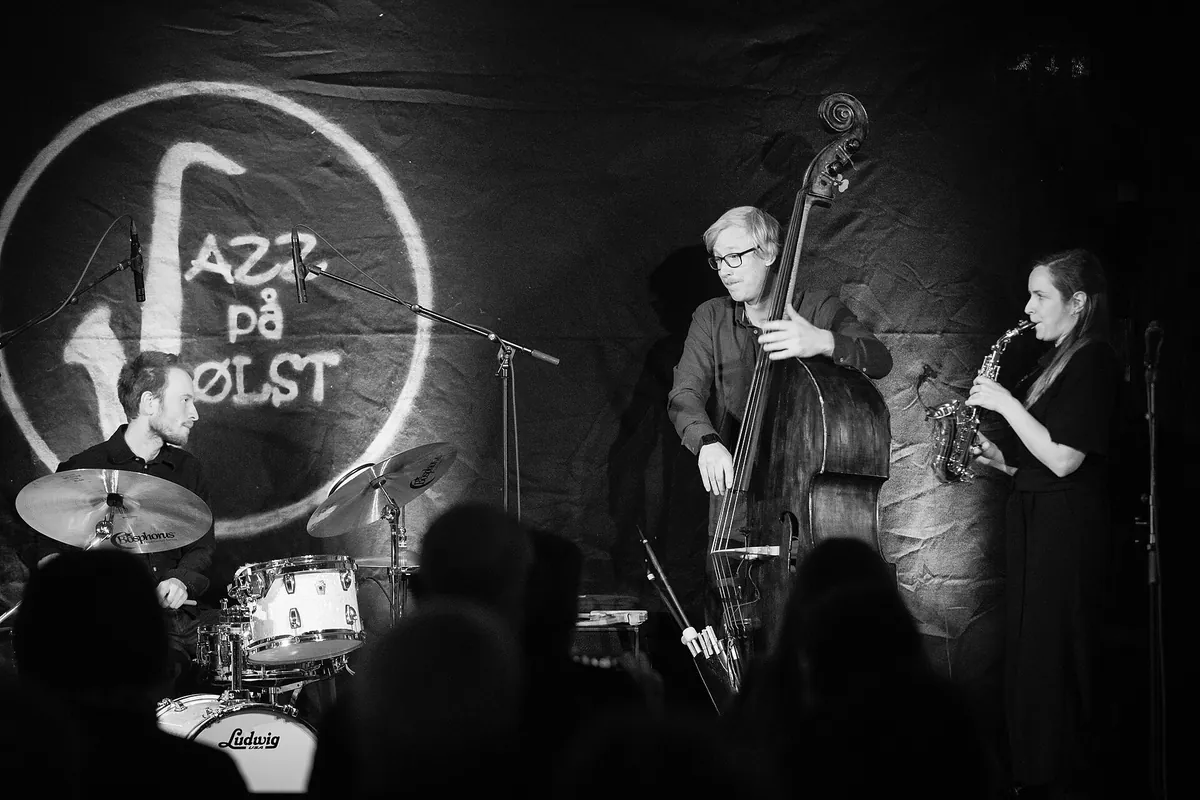
A jazz trio on stage in Norway, for the instruments; not the Corfu musicians. -
Greek jazz
A music that never went mainstream here
The World of Jazz overview says jazz was never a popular music in Greece the way it was across much of Europe. It records the pianist Mimis Plessas forming a jazz quartet in 1946, dates the start of a confident Greek jazz scene to the mid-to-late 1970s, and mentions Lakis Zois’s trio playing at the George Barakos Jazz Club in Athens’s Plaka from 1975 and the group Sphinx releasing its debut album in 1979. A jazz evening on Corfu is therefore a small, local pleasure, not an echo of a national habit.
-
Band culture
An island that learned music in brass bands
Wikipedia’s article on the Philharmonic Society of Corfu says it was founded on 12 September 1840, with the aim of becoming the first Greek music academy organised on European lines, and that its founding followed a British administration ban on British army bands taking part in Orthodox religious events. Its band first appeared in August 1841. The same article describes it as the fourth civilian band in the Ionian Islands, after those of Zakynthos, Argostoli and Lixouri.
-
The school
Italian opera, Greek words
The Ionian or Heptanese school of music is the name for a group of composers from the Ionian Islands, active from the early 19th century to about the 1950s. Wikipedia says its early works were shaped largely by the Italian tradition, and that by the 1820s these composers were building a national music with the Greek vernacular and, later, folklore. The most prominent names it lists are Nikolaos Mantzaros, Spyridon Xyndas, Spyridon Samaras and Pavlos Carrer.
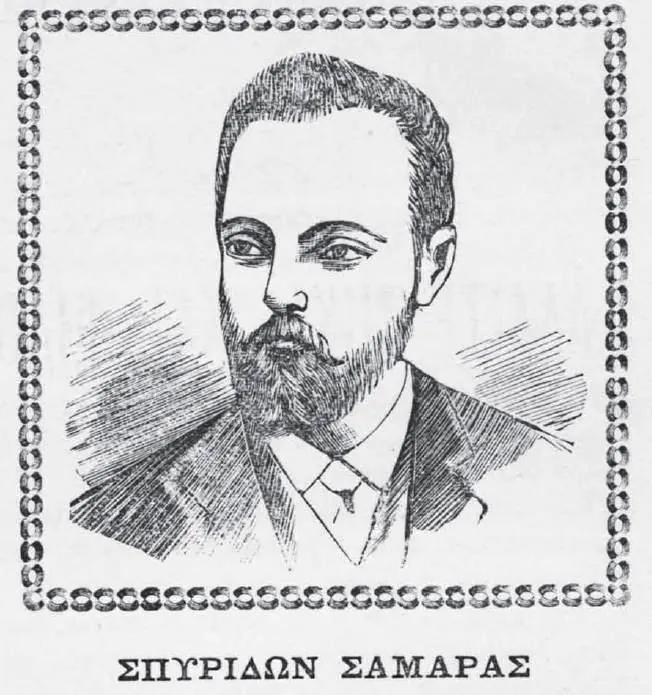
Spyridon Samaras, born in Corfu in 1861. -
The anthem
A Corfiot tune that became a national one
Wikipedia credits Nikolaos Mantzaros, born in Corfu in 1795, with the musical setting of Dionysios Solomos’s poem Hymn to Liberty, dated there to 1828 and flagged as resting on a self-published source. It records the first two stanzas being adopted as the Royal Anthem of Greece in 1864 and as the national anthem on 28 June 1865. The Philharmonic Society article adds that its band first played the anthem in 1864.
-
The Games
The Olympic hymn came from Corfu
Spyridon Samaras was born in Corfu on 29 November 1861. According to Wikipedia he composed the Olympic Hymn at the request of Demetrius Vikelas, to words by Kostis Palamas, and it was first performed at the opening ceremony of the 1896 Games. It was largely forgotten for about fifty years, was declared the Olympic anthem by the International Olympic Committee in 1958, and has been used at every opening ceremony since the 1960 Winter Games.
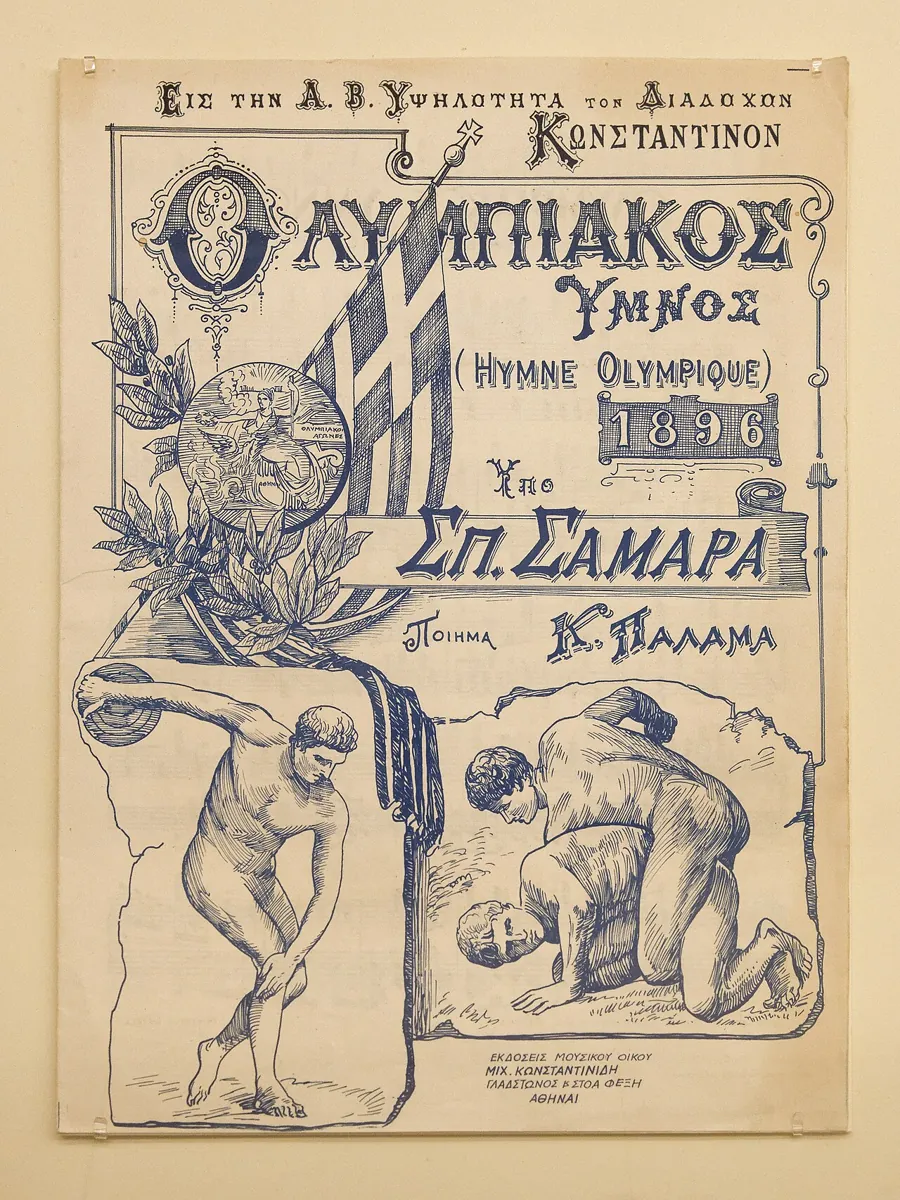
The cover of the 1896 Olympic hymn score. -
The setting
A citadel turned into an island
Wikipedia says military engineers Savorgnan and Martinengo designed the Old Fortress’s bastions between 1545 and 1555, and that the Venetians dug a sea channel, the Contrafossa, which made the citadel an artificial island. It repulsed Ottoman sieges in 1537, 1571 and 1716. Today the fortress holds exhibitions, the town’s public library and the Ionian University’s Hellenic Music Research Lab, so music has a lodging inside it. UNESCO added the Old Town of Corfu to its World Heritage List in 2007.
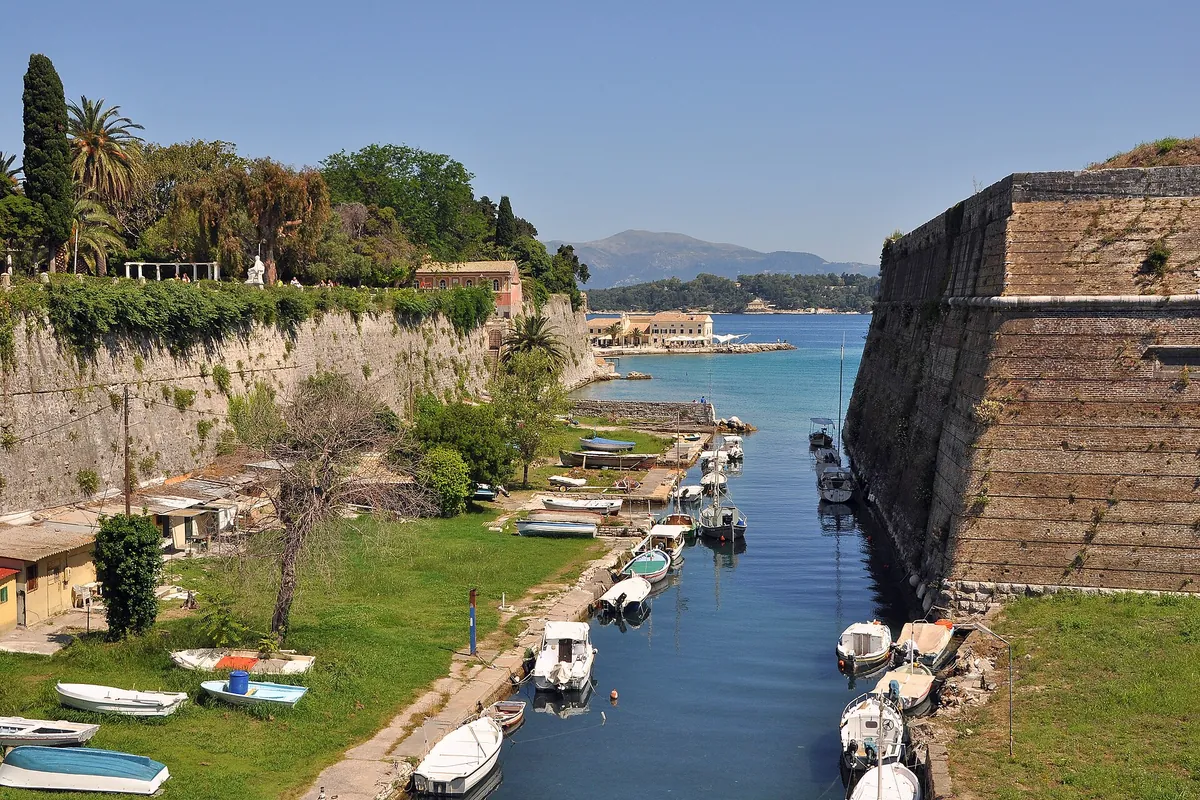
The sea channel that cuts the fortress off from the town.
Sources: English Wikipedia on jazz standards, the Philharmonic Society of Corfu, Nikolaos Mantzaros, Spyridon Samaras, the Ionian school, the Old Fortress and the Old Town of Corfu; World of Jazz on jazz in Greece.
Corfu town, in dates
Corfu town in eight dates
- 1386–1797
Venice ruled Corfu for these four centuries, according to Wikipedia’s article on the Old Town.
What it adds to your evening: The walls and bastions around the harbour come from this long Venetian period, and the terrace sits at their foot.
- 1537, 1571, 1716
The Old Fortress repulsed Ottoman sieges in these years, says Wikipedia.
What it adds to your evening: It explains why the stone above the marina looks built for war and not for show.
- 1815–1864
The Ionian Islands were under British protection, until union with Greece in 1864.
What it adds to your evening: The British period overlaps the first generation of the Ionian school of composers, and the Philharmonic Society grew up within it.
- 1824
The Ionian Academy opened in 1824, Wikipedia’s Corfu Town article records.
What it adds to your evening: Education and music-making were being organised in the town while the Venetian fortifications were already old.
- 1840
The Philharmonic Society of Corfu was founded on 12 September 1840.
What it adds to your evening: The society’s band, first heard in 1841, is still its most popular ensemble, according to the same article, so brass and woodwind are part of the island’s sound.
- 1864 and 1865
The Hymn to Liberty was adopted as the Royal Anthem in 1864 and as Greece’s national anthem in 1865, per Wikipedia’s article on Mantzaros.
What it adds to your evening: The tune by a Corfu composer became the one the country stands for.
- 1896
Samaras’s Olympic Hymn was first performed at the Games’ opening ceremony in 1896.
What it adds to your evening: A second Corfiot composer is behind a piece heard at every opening ceremony of the modern Games.
- 2007
UNESCO added the Old Town of Corfu to its World Heritage List in 2007.
What it adds to your evening: The harbour, the fortress and the old streets around your terrace are protected as one fortified maritime town.
Reading the listing closely
What the listing covers, and where it stops
Seven points taken from the listing as it stood on 19 November 2026. Wherever the listing is silent, so is this guide.
Open the calendar ↗The lowest ticket price seen at the time of checking. Your date in the calendar gives the exact total, shown in the currency you pick.
- The music
- Three sets played by handpicked local jazz musicians: classic standards, modern interpretations and improvisation. The page does not name the players, so the line-up can change.
- The stories
- A host talks between the sets about the musical heritage of the island. The page lists the host as speaking English.
- The place
- A pop-up jazz club on the marina-side terrace of the Corfu Sailing Restaurant, beside the Venetian walls in the old harbour by the Old Fortress.
- The table
- Every guest has a reserved table. The page does not say how tables are shared between parties.
- The bill
- The ticket covers no meal. The restaurant bills whatever you order on its own.
- The season
- The listing says it follows four sold-out seasons. It is a summer event, with dates opening on the calendar.
- What it does not say
- Start times, wheelchair access, rain arrangements and whether children are welcome are not stated on the page, so confirm anything that matters to you through the booking page or your confirmation e-mail.
Under the stars or under sail
Harbour jazz or a sunset sail: which Corfu evening?
Book the music, then fill the other Corfu days
Other Corfu bookings to set beside it
The jazz night fills one evening of a summer visit. Three other bookings from the same system sit beside it: a sunset sail on a wooden boat, a day among the Paxos islands, and a coastal day trip in the north-east.
- See dates ↗
Live jazz and local stories by the Old Fortress
The evening this page is about: three sets of jazz on a marina terrace in the old harbour, with a host telling island stories between sets, and a reserved table for every guest.
- See dates ↗
Sunset cruise on a classic wooden boat
A two-hour sail from Corfu town, with cocktails and snacks in the title. The closest rival for a summer evening, and a natural pairing on a different night.
- See dates ↗
Day cruise to Paxos, Antipaxos and the Blue Caves
A full-day boat trip to the Paxi islands and their sea caves, which suits a day when you want to leave Corfu town behind.
- See dates ↗
Kassiopi and Canal d’Amour day trip
A seven-hour trip along the north-east coast, to a fishing village and a rock-lined sea channel, for a day on land and by the water.
Also bookable around Corfu
Getting the evening right
Four things to settle before the first set
Choose a summer date
Open the calendar and pick from the dates it shows. The event runs in the summer season, so a winter search will show nothing; the first date visible on 19 November 2026 was 1 June 2027.
Plan dinner separately
The restaurant bills dinner and drinks itself, outside your ticket. Settle in advance whether you will eat there.
Bring a layer
The terrace is open-air beside the water. A light jacket or scarf costs nothing to pack, and one reviewer found it chilly and windy.
Read the route on your confirmation
The booking page mentions reaching the venue on foot through the Old Fortress. Your voucher holds the meeting details and says whether the fortress needs an entry ticket.
The fortress, the moat and the promenade
The fortress, the moat and the promenade
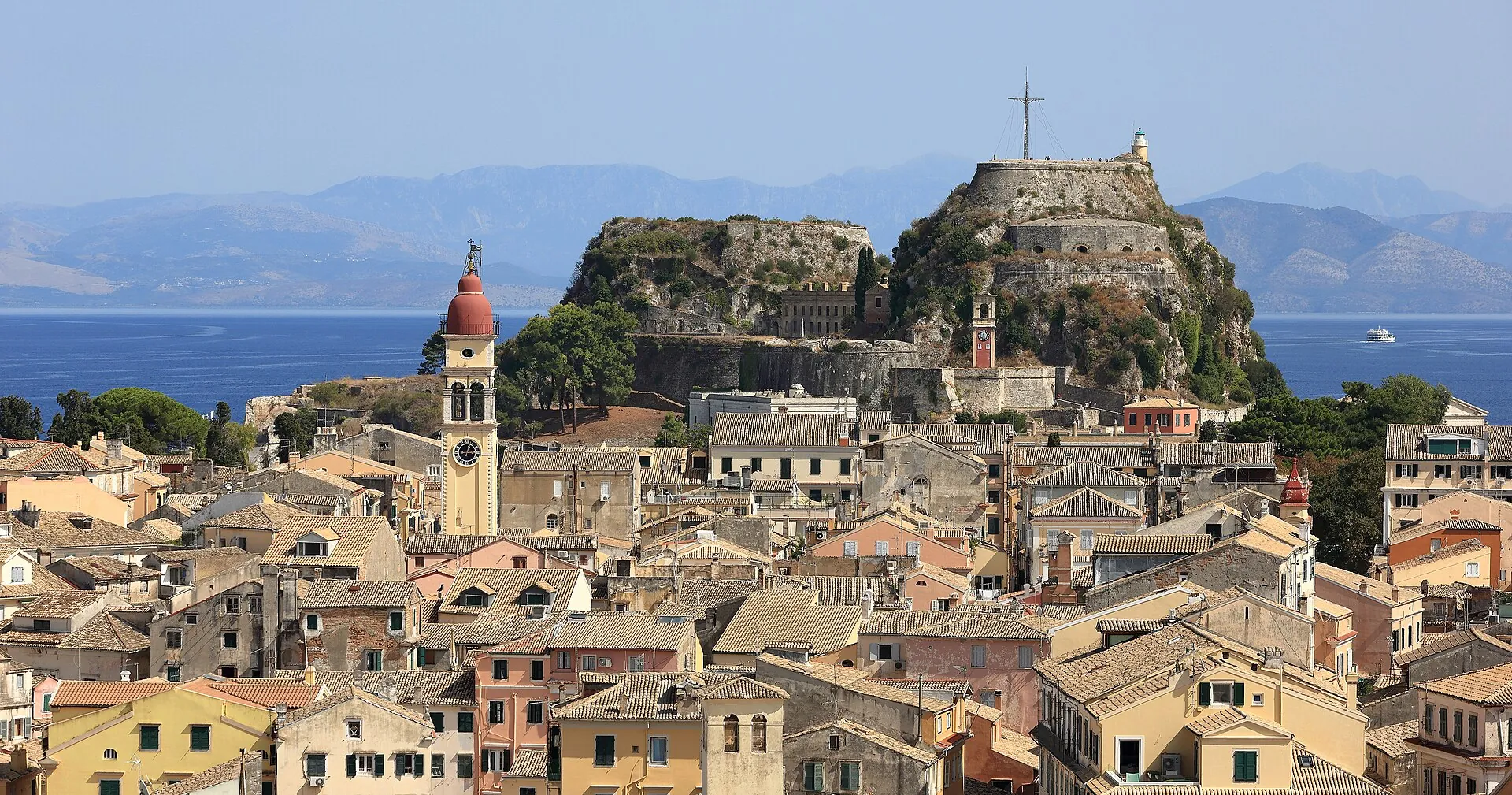
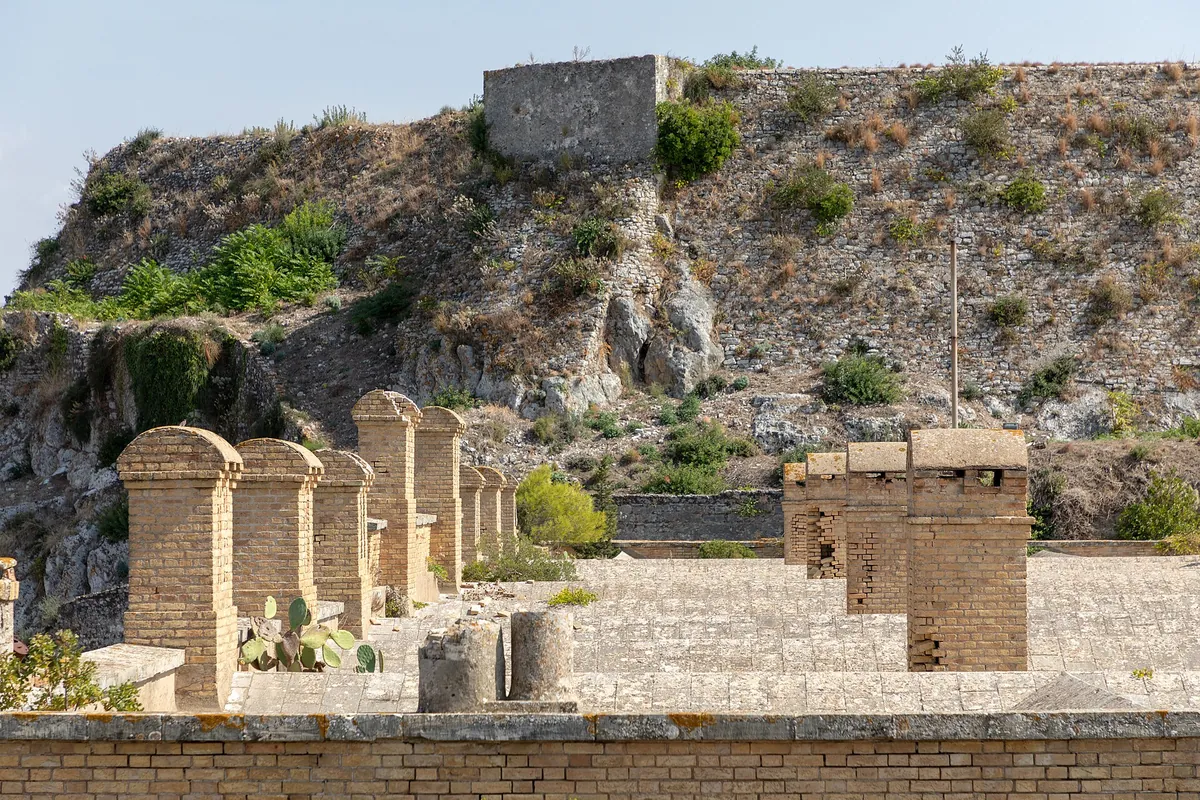
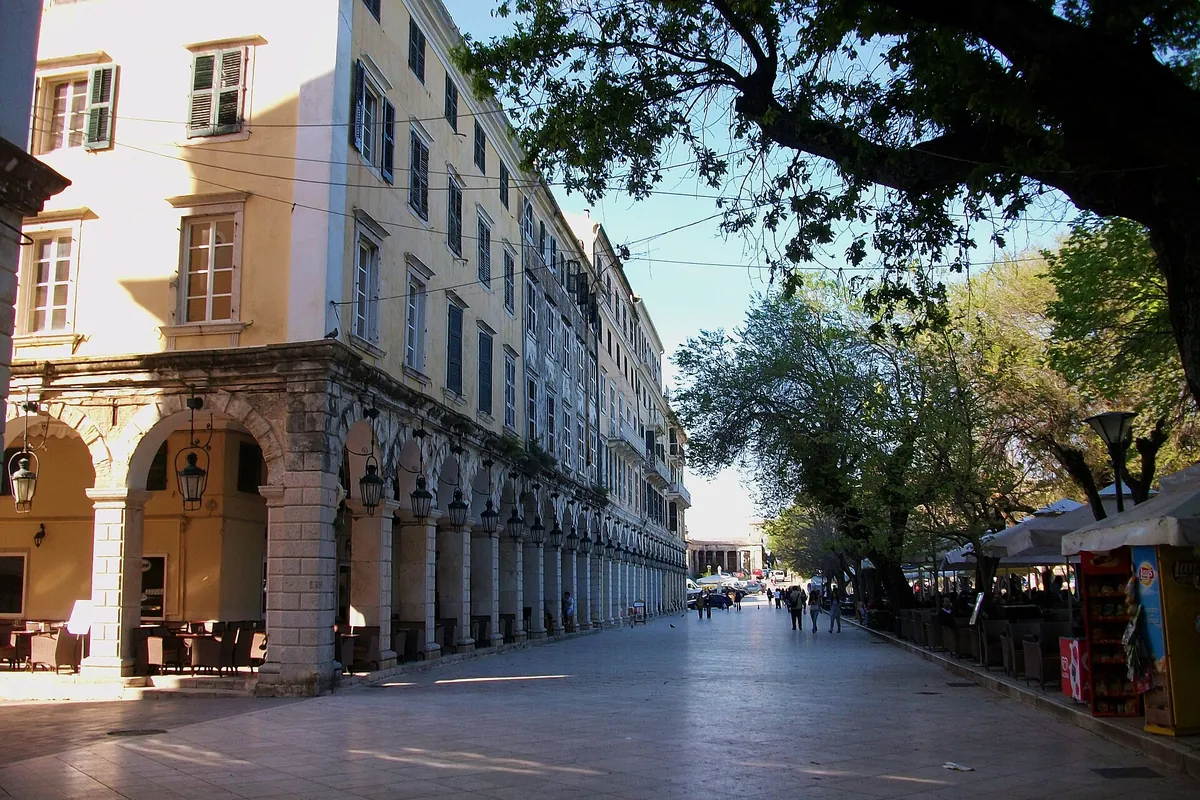
Real photographs from Wikimedia Commons: the Old Fortress above the old town, a terrace on its bastions, the sea channel beside it, the Liston arcade, a jazz trio on stage elsewhere, and two pieces of Corfu’s musical history.
Longer reads
Six reads on the music, the fortress and the season
- Start here Is the Corfu harbour jazz night worth it? What 4.9 stars can and cannot tell you A direct answer on an open-air jazz evening beside the Old Fortress: what you hear, what the ticket leaves out, why it only runs in summer, and who should pick something else. Read →
- The comparison Harbour jazz or a sunset sail: which Corfu evening? Two summer evenings that both end in a good view: three sets of jazz at a reserved table beside the Old Fortress, or two hours under sail on a classic wooden boat. How they differ and when each wins. Read →
- The bands Corfu’s bands and the Philharmonic Society, from 1840 Why a Greek island holds a nineteenth-century music academy and a brass-and-woodwind band that played the national anthem and the Olympic hymn. Read →
- The composers The Ionian school: Mantzaros, Xyndas and Samaras Three Corfu-born composers who turned Italian opera training into a Greek national music, and the tunes of theirs you already know. Read →
- The setting The Old Fortress and the Venetian harbour of Corfu What stands beside the jazz terrace: a Venetian citadel cut off from the town by a sea channel, sieges that failed, and a fortress that now holds a library and a music lab. Read →
- The practical guide Planning the Corfu jazz night: season, layers and tables The practical details of a summer-only, open-air evening: when dates appear, what to wear, how the table and the bill work, and what to check on your confirmation. Read →
FAQ
Questions to settle before you pick a date
Is the Corfu harbour jazz night worth it?
For most summer visitors, yes. It holds 4.9 from 178 reviews on GetYourGuide, gives you three sets of live jazz, a host telling island stories and a reserved table, beside the Old Fortress. It is a weaker fit for off-season visitors, for anyone hoping dinner is bundled in, and for people who dislike open-air evenings.
When does it run?
It belongs to the summer season. On 19 November 2026 the calendar began at 1 June 2027, and more dates appear as the season is scheduled. Nothing is offered for winter, so match the calendar against your travel window.
What happens during the evening?
The booking page describes handpicked local jazz musicians playing three sets: classic standards, modern interpretations and improvisation. Between the sets a host tells stories about Corfu’s musical heritage. Each guest has a reserved table.
Does the ticket cover a meal?
No. The restaurant whose terrace hosts the music bills food and drinks itself. Your ticket pays for the music, the stories and your table.
Will it be cold or windy?
It is open-air, beside the water. One reviewer found it windy and chilly, so bring a light layer even if the day was warm. The booking page does not describe what happens in rain, so check your confirmation.
How do I get there?
The booking page mentions reaching the venue on foot through the Old Fortress, in the old harbour of Corfu town. It does not say whether a fortress entry ticket is needed, so read your voucher and confirmation before you set out.
Which language does the host speak?
English, for the stories between sets; the music itself needs no translation.
What are the cancellation terms?
GetYourGuide shows free cancellation, plus a reserve-now, pay-later choice, for this booking. Your date’s cut-off sits in the calendar, so check it before confirming.
Does this page belong to the restaurant or the band?
Neither. It is a reader-supported guide with no link to the players, the restaurant or the ticket seller; you complete the booking on GetYourGuide.